Equipment failure isn’t always mechanical. Sometimes, it’s procedural. One of the most preventable causes of industrial injury—contact with unexpectedly energized machinery—starts not with a faulty switch, but with a missing or poorly written lockout tagout (LOTO) procedure. OSHA estimates that proper lockout tagout practices prevent 120 fatalities and 50,000 injuries annually. At the core of that protection? A clear, site-specific, written LOTO procedure.
Without one, even trained workers operate under guesswork. They might assume a machine is de-energized when it isn’t, skip steps because they’re undocumented, or use incorrect lock types. A written LOTO procedure isn’t a formality—it’s a legally required roadmap for zero-energy state verification.
This guide breaks down what a compliant written LOTO procedure must include, how to structure it effectively, and where most organizations fall short.
Why a Written LOTO Procedure Is Non-Negotiable
OSHA 29 CFR 1910.147(c)(4) explicitly requires employers to “establish a written energy control program” that includes “documented procedures for shutting down, isolating, blocking, and securing machines or equipment to control hazardous energy.”
Verbal instructions don’t count.
A written LOTO procedure serves three critical functions:
- Standardization – Ensures every authorized employee follows the exact same steps, every time.
- Accountability – Provides auditable proof of compliance during inspections.
- Clarity – Eliminates ambiguity in complex shutdown sequences involving multiple energy sources.
Organizations that rely on memory or informal checklists often fail during surprise audits. Worse, they create conditions where shortcuts become routine. A 2022 OSHA report cited missing or incomplete LOTO documentation in 73% of cited incidents involving machinery servicing.
Core Components of a Valid Written LOTO Procedure
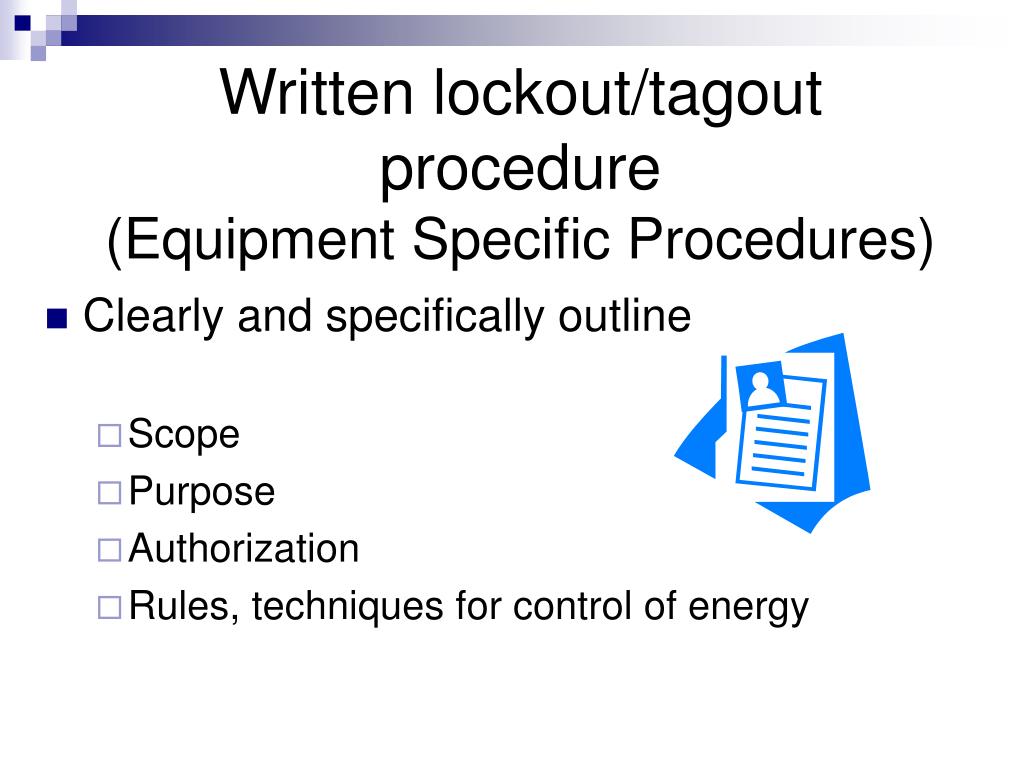
A compliant written LOTO procedure isn’t a generic template. It’s machine-specific and action-oriented. Here are the mandatory elements:
#### 1. Machine Identification Clearly state the equipment by name, model, location, and ID number. Example: > CNC Lathe #3 – Production Floor West, Model XYZ-2000, Asset ID: ML-8842
#### 2. Energy Sources List every potential energy source associated with the machine: - Electrical (120V, 480V) - Pneumatic (compressed air lines) - Hydraulic (fluid under pressure) - Mechanical (springs, gravity-fed components) - Thermal (heated surfaces, steam)
Do not assume only one source matters. A conveyor system may appear electric-only but rely on stored tension in rollers.
- #### 3. Shutdown Sequence Step-by-step instructions for safely shutting down the machine during normal operations. Use active verbs:
- Notify all affected employees that servicing will begin.
- Press the emergency stop button on the control panel.
- Rotate the main power selector switch to “Off.”
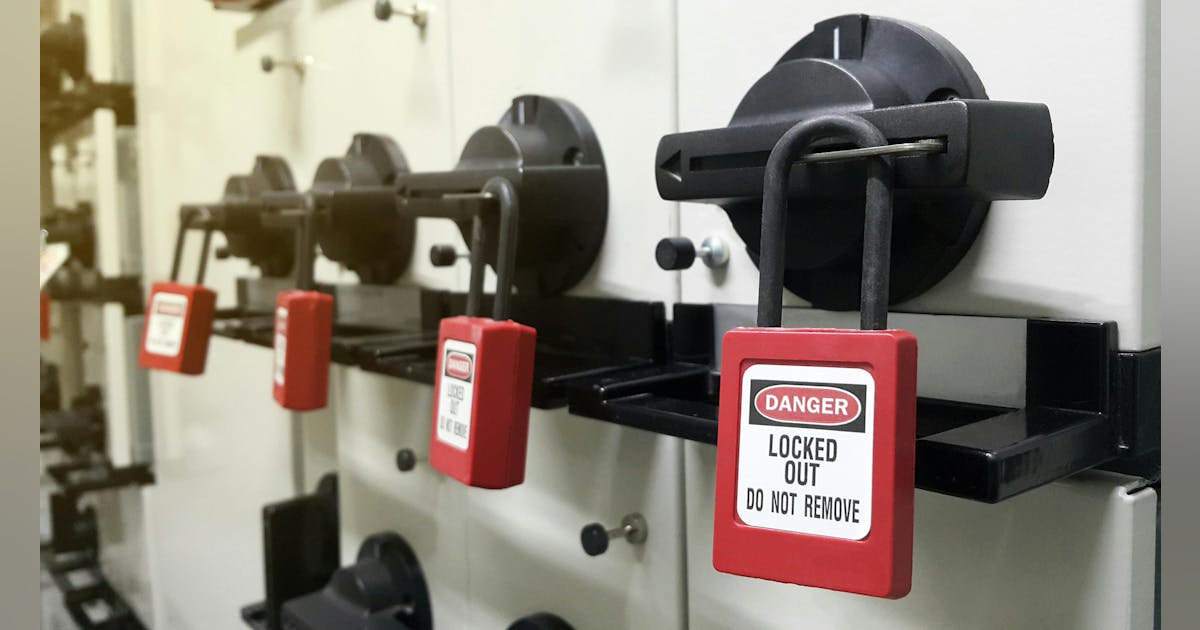
#### 4. Isolation Methods Specify exactly how to disconnect each energy source: - Electrical: Lock out the disconnect switch at Panel B-7 using a keyed hasp. - Pneumatic: Close and lock the inline shutoff valve (Valve #5A). - Hydraulic: Release pressure via bleed valve and install a physical block.
Mention the type and location of lockout points. Include diagrams if helpful.
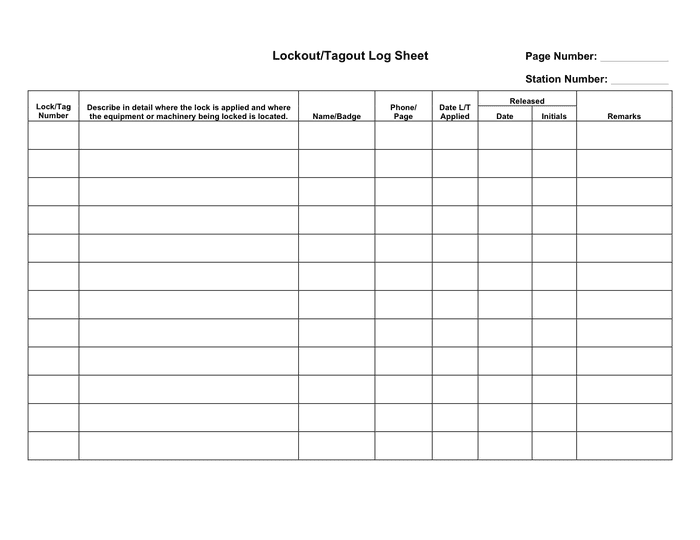
#### 5. Application of Locks and Tags
- Employee name
- Department
- Date and time of lock application
- Reason for lockout
Tags must be standardized and durable—no handwritten slips of paper.
#### 6. Stored Energy Release Describe how to safely dissipate residual energy: - Bleed hydraulic lines using designated ports. - Lower elevated components using controlled descent. - Allow thermal systems to cool below 100°F.
This section is frequently overlooked. Stored energy causes nearly 25% of LOTO-related injuries.
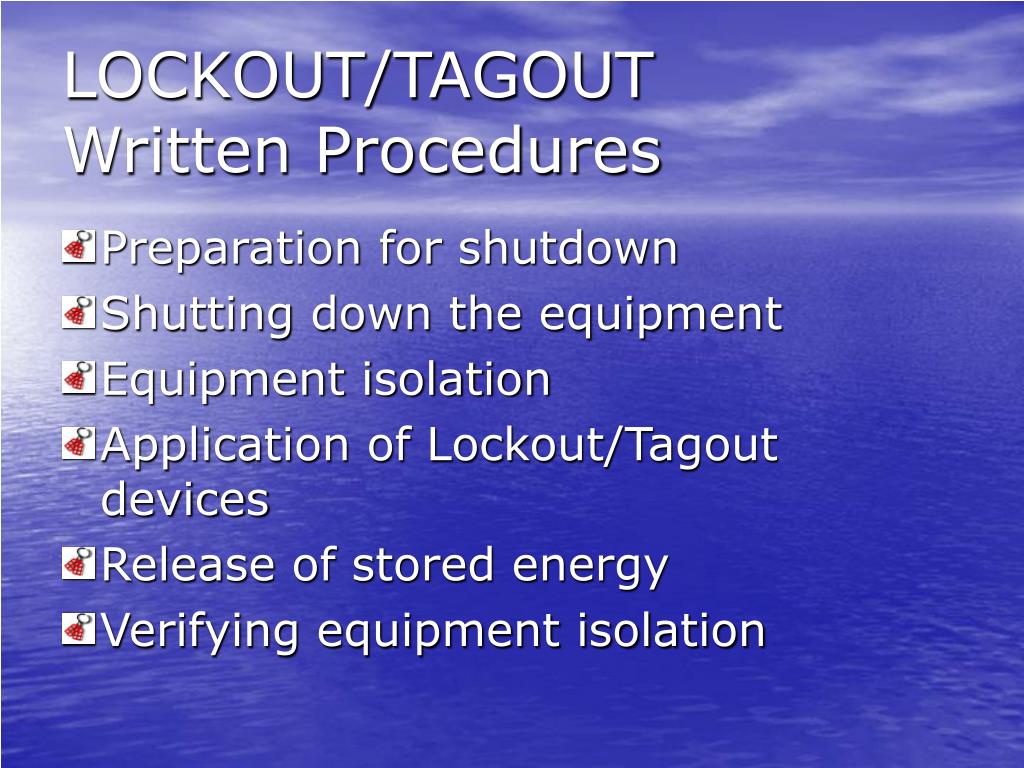
#### 7. Verification of Zero-Energy State The most critical step: proving the machine is safe to work on. - Use a voltage tester on primary circuits. - Attempt to operate the machine’s start function (without re-energizing). - Confirm no movement, pressure, or heat remains.
Verification must be performed by the authorized employee—not assumed.
- #### 8. Restoration Steps Outline how to safely return the machine to service:
- Ensure all tools are removed and guards reinstalled.
- Clear the work area of personnel.
- Remove locks only by the individual who applied them.
- Notify affected employees before restart.
Never allow lock removal by proxy without strict shift-change protocols.
Real-World Example: LOTO for a Hydraulic Press
To illustrate, here’s a simplified snippet from a written procedure for a 400-ton hydraulic press:
Machine: Hydraulic Press Model HP-400, Station 4 Energy Sources: 480V electrical, 3,000 psi hydraulic, mechanical (ram spring)
- Shutdown Steps:
- Depress “Stop” button until the control light turns red.
- Rotate main disconnect switch to “Off” at Panel H-2.
- Close and lock hydraulic isolation valve (V-3B) in the floor manifold.
- Open manual bleed valve to release line pressure. Confirm gauge reads 0 psi.
- Engage mechanical lock pin on the ram assembly.
Lock Application: - Apply personal lock to disconnect switch. - Apply second lock to hydraulic valve. - Tag both with name, date, and “Servicing – Do Not Operate.”
Verification: - Test for voltage at control circuit (verified with multimeter). - Press “Start” button—no response indicates success. - Visually confirm ram is secured by lock pin.
This example covers critical touchpoints without fluff. Each step is measurable, repeatable, and verifiable.
Common Mistakes That Invalidate LOTO Procedures
Even documented procedures fail when written poorly. Here are frequent flaws:
#### 1. Copy-Paste Templates Using a generic LOTO form for every machine ignores unique energy profiles. A packaging line’s pneumatic actuators require different handling than a boiler’s steam valves.
#### 2. Missing Stored Energy Steps Failing to address residual force leads to crush injuries. Springs, elevated loads, and capacitors can release energy long after power is cut.
#### 3. Vague Language Phrases like “isolate the power source” or “ensure machine is off” lack specificity. What isolation method? Which power source? Precision is mandatory.
#### 4. Omitting Verification Some procedures skip the “prove it’s dead” step. Verification isn’t optional—it’s the legal and physical confirmation of safety.
#### 5. No Review or Update Schedule Equipment changes. New energy sources get added. A LOTO procedure written five years ago may not reflect today’s configuration. OSHA requires annual audits—and procedure updates when changes occur.
How to Audit and Maintain LOTO Procedures
A written LOTO procedure isn’t “set and forget.” It requires active oversight.
#### Conduct Annual Inspections Each year, a trained auditor (not involved in the procedure’s creation) must: - Observe an authorized employee performing the LOTO sequence. - Confirm all steps align with the written document. - Verify locks, tags, and tools are correct. - Identify any deviations or hazards.
The audit must be documented and signed. Findings must trigger corrective action.
#### Update Procedures After Changes If a machine is modified—say, a new control panel is added—revise the LOTO procedure before the next servicing. Delaying updates creates dangerous gaps.
#### Train Employees on the Written Document Training must reference the actual written procedure. Employees should be able to recite key steps and demonstrate verification techniques. Role-playing lockout scenarios improves retention.
The Cost of Skipping Documentation
Beyond legal penalties—OSHA fines can exceed $15,000 per violation—the real cost is human. In 2021, a maintenance technician at a Midwest food plant was fatally crushed by a conveyor that reactivated during servicing. Investigation revealed no written LOTO procedure existed for that line. The employer faced criminal negligence charges.
Smaller incidents are more common: a finger amputation from an unblocked press, burns from steam valve release, or electric shock from an assumed-dead circuit. These injuries stem not from recklessness, but from missing or inadequate documentation.
A written LOTO procedure is the last line of defense when assumptions fail.
Building a LOTO Procedure: A Step-by-Step Workflow
Creating a compliant document doesn’t require a safety PhD. Follow this process:
- Inventory Machines – List every piece of equipment requiring servicing.
- Map Energy Sources – For each machine, identify all energy types and isolation points.
- Draft the Procedure – Use the eight components outlined earlier.
- Validate with a Dry Run – Have an authorized employee follow the steps on a non-operational machine.
- Review with Staff – Get feedback from maintenance and production teams.
- Finalize and Distribute – Publish in accessible formats (print, digital).
- Schedule Annual Audit – Assign ownership and track compliance.
Store procedures near the machine or in a centralized safety portal. If it takes more than 30 seconds to find, it might as well not exist.
Closing: Make Your LOTO Procedure a Living Document
A lockout tagout written procedure isn’t just a folder in a compliance binder. It’s a functional tool that protects lives every time a technician opens an electrical panel or services a drive belt. The best procedures are clear, machine-specific, and regularly tested.
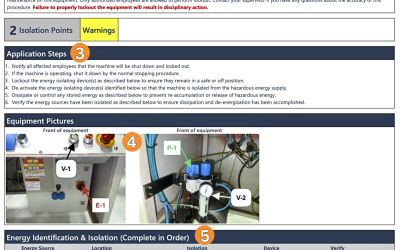
Start by auditing your most hazardous equipment. If the written LOTO procedure doesn’t exist or can’t be followed in under two minutes, rewrite it now. Use real photos, precise language, and verification checkpoints. Then train your team using that document—not a summary, not a memory test.
Safety isn’t about intent. It’s about documentation, discipline, and daily execution.
Frequently Asked Questions
What is the OSHA requirement for a written LOTO procedure? OSHA 29 CFR 1910.147(c)(4) mandates a written energy control program with documented procedures for isolating machines and controlling hazardous energy during servicing.
Can a LOTO procedure be digital? Yes, if it’s readily accessible to authorized employees at the worksite. Digital formats must be reliable, updatable, and viewable without login delays.
Who writes the LOTO procedure? Typically, a safety manager or engineer in collaboration with maintenance supervisors and authorized employees who perform the work.
How often must LOTO procedures be reviewed? At least annually, via an independent audit. Procedures must also be updated whenever equipment or processes change.
Do all machines need a written LOTO procedure? Only machines with hazardous energy sources that require servicing or maintenance where unexpected startup could cause injury.
Can one procedure cover multiple machines? Only if the machines are identical in energy sources and isolation methods. Otherwise, each machine requires its own documented procedure.
What’s the penalty for not having a written LOTO procedure? OSHA classifies it as a serious violation, with penalties up to $15,625 per instance. Willful or repeated violations carry higher fines and potential criminal charges.
FAQ
What should you look for in Lockout Tagout Written Procedure: What You Need to Know? Focus on relevance, practical value, and how well the solution matches real user intent.
Is Lockout Tagout Written Procedure: What
You Need to Know suitable for beginners? That depends on the workflow, but a clear step-by-step approach usually makes it easier to start.
How do you compare options around Lockout Tagout Written Procedure: What You Need to Know? Compare features, trust signals, limitations, pricing, and ease of implementation.
What mistakes should you avoid? Avoid generic choices, weak validation, and decisions based only on marketing claims.
What is the next best step? Shortlist the most relevant options, validate them quickly, and refine from real-world results.