Every year, hundreds of workers suffer serious injuries—or worse—because machinery was accidentally energized during maintenance. The solution isn’t new technology or complex engineering. It’s a simple, standardized procedure documented in a lockout tagout safety PDF. When properly implemented, these documents don’t just check a compliance box—they save lives.
A lockout tagout (LOTO) safety PDF serves as both a training tool and operational blueprint. It outlines the exact steps to de-energize equipment, apply locks and tags, verify isolation, and safely restore power. More than a reference, it’s a living document that aligns teams, reduces risk, and meets OSHA 1910.147 standards.
Yet, many workplaces treat LOTO procedures as afterthoughts—buried in folders, outdated, or absent entirely. That’s a critical mistake. Without a clear, accessible PDF guide, even experienced technicians can make fatal errors.
Let’s break down what makes an effective lockout tagout safety PDF, how to use it, and why its quality directly impacts safety outcomes.
Why a Lockout Tagout Safety PDF Is Non-Negotiable
A lockout tagout safety PDF isn’t just convenient—it’s a legal and operational necessity. OSHA mandates that every facility with hazardous energy sources maintain written energy control procedures. These must be detailed, machine-specific, and available to all affected employees.
Without a PDF version, procedures are harder to distribute, update, and train on. Paper copies get lost. Verbal instructions vary. A digital PDF standardizes the message.
Real-world example: At a Midwest manufacturing plant, a maintenance worker was clearing a jam in a conveyor system. The machine had no written LOTO procedure, and the technician assumed the power was off. A coworker restarted the line remotely. The result: a crushed hand and a $150,000 OSHA fine. An accessible LOTO safety PDF could have prevented both.
Key functions of a strong LOTO safety PDF: - Clarity: Eliminates ambiguity in shutdown and isolation steps. - Consistency: Ensures every employee follows the same protocol. - Compliance: Serves as proof of due diligence during audits. - Training: Acts as a core resource in onboarding and refreshers.
If your LOTO procedures exist only in someone’s head or a faded binder, you’re not compliant—and you’re risking lives.
Core Components of an Effective LOTO Safety PDF
A high-quality lockout tagout safety PDF isn’t a generic template. It’s tailored, visual, and actionable. Here’s what must be included:
#### 1. Equipment Identification Clearly name and illustrate the machine. Include model numbers, location, and energy types involved (electrical, hydraulic, pneumatic, chemical, etc.).
Example: “Conveyor Line #4: 480V electrical, 120 psi pneumatic actuators.”
#### 2. Authorized vs. Affected Employees Define roles: - Authorized employees perform LOTO and service equipment. - Affected employees operate or use the equipment but don’t service it.
This distinction determines training depth and responsibility.

- #### 3. Step-by-Step Shutdown Procedure List exact actions in order:
- Notify all affected personnel.
- Shut down the machine using normal controls.
- Isolate all energy sources (disconnect switches, close valves).
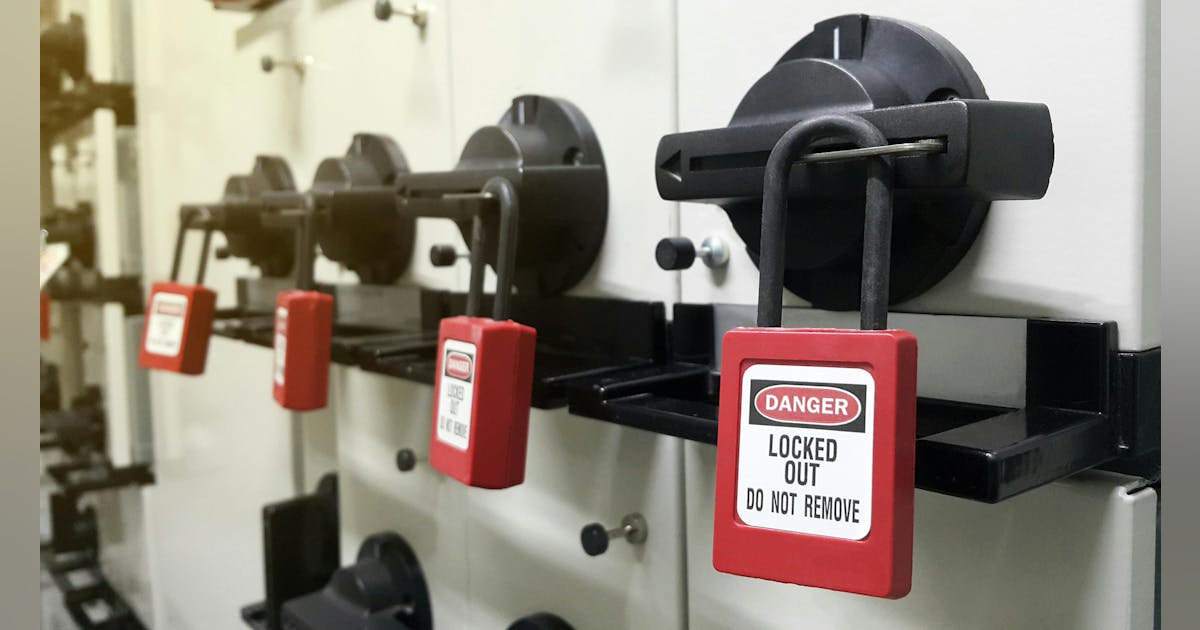
- Apply lockout devices (lock hasps, valve locks, circuit breaker locks).
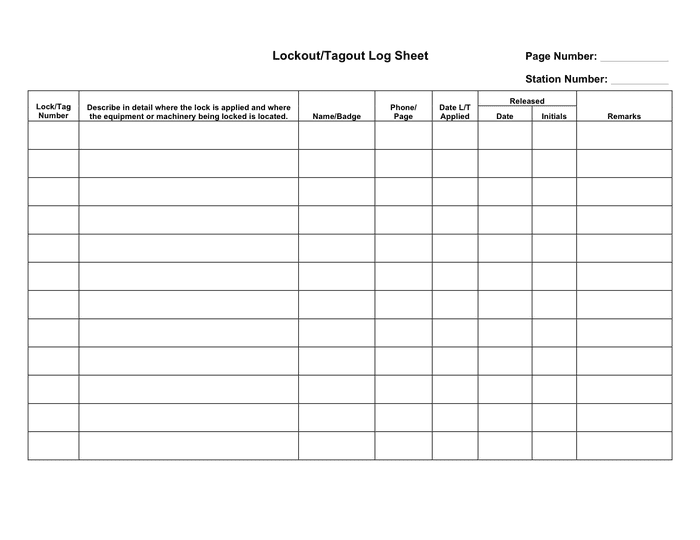
- Attach tags with worker name, date, reason.
- Release stored energy (bleed lines, block moving parts, discharge capacitors).
- Verify isolation (attempt to restart—only after ensuring zero risk).
Common mistake: Skipping verification. Workers assume “off” means “safe.” Stored energy can remain active long after power-down.
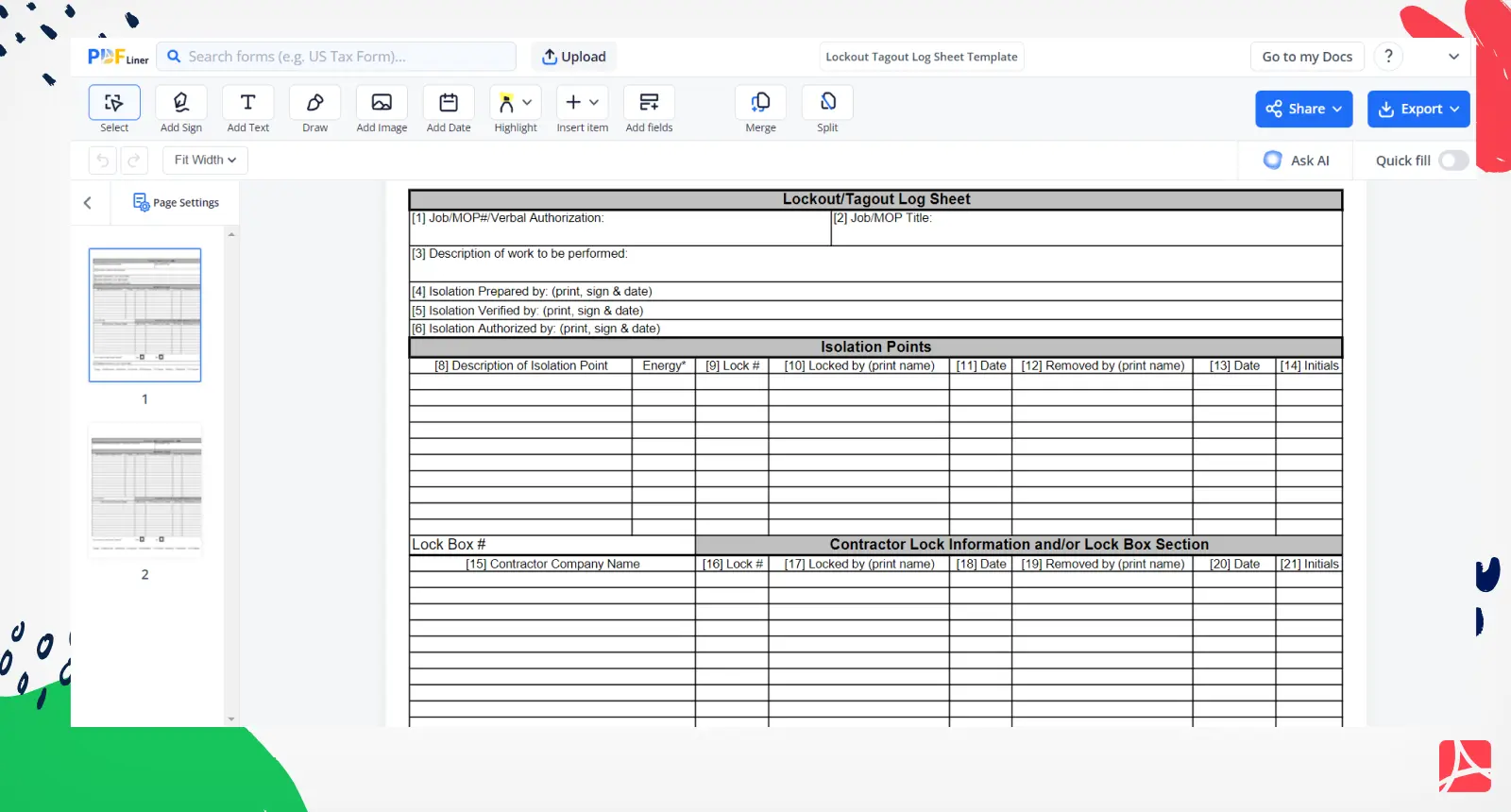
#### 4. Group Lockout Instructions For team maintenance, include: - Use of a group lockout box. - Each technician applies their personal lock. - Primary authorized employee coordinates clearance and removal.
#### 5. Restoration Steps Equally critical. Outline: - Confirm machine is ready and clear. - Remove tools and guards. - Notify all personnel. - Remove locks and tags. - Re-energize in reverse order.
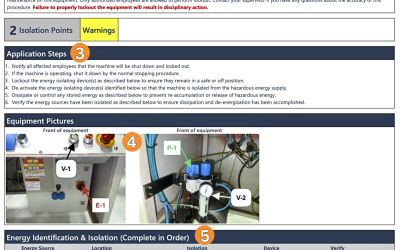
#### 6. Visual Aids and Diagrams Include labeled images of: - Lock placement points - Energy isolation valves - Tag examples - Machine layout
A diagram of a press with red “lock here” indicators is worth 500 words of text.
#### 7. Emergency Exceptions Address rare cases where LOTO isn’t feasible (e.g., minor tool changes, lubrication). Only permitted under OSHA’s “minor servicing exception”—and only if risks are controlled.
How to Use a LOTO Safety PDF in Daily Operations
A PDF isn’t useful if it’s not used. Here’s how to integrate it into real workflows:
#### Make It Accessible - Store on shared drives with clear naming: LOTO_Procedure_Conveyor_Line4.pdf - Print and post near equipment. - Load onto tablets used by maintenance teams.
Tip: Use QR codes on machines that link directly to the PDF.
#### Train with the PDF During onboarding, walk new technicians through the document: - Read each step aloud. - Simulate the process on a de-energized machine. - Quiz understanding before granting authorized status.
#### Update Regularly Equipment changes. Procedures must too. Review LOTO PDFs: - After any machine modification - Annually as part of safety audits - Following an incident or near-miss
Red flag: A LOTO PDF last revised in 2018 for a machine upgraded in 2023 is outdated and dangerous.
#### Audit Compliance Use the PDF as an audit checklist: - Are locks applied where specified? - Are tags filled out completely? - Is verification being performed?
Document findings. Correct gaps immediately.
Common Mistakes in LOTO Safety PDFs (And How to Fix Them)
Even seemingly complete LOTO PDFs fail when they contain flaws. Here are the most frequent errors:
| Mistake | Risk | Fix |
|---|---|---|
| Generic procedures | One-size-fits-all steps miss machine-specific hazards | Customize for each equipment type |
| Missing energy types | Hydraulic or gravity energy overlooked | List all energy sources per machine |
| No verification step | False assumption of safety | Add “verify isolation” as mandatory |
| Unclear diagrams | Locks applied to wrong point | Use high-res, labeled visuals |
| No revision date | Outdated info used unknowingly | Add footer with last review date |

Real case: A food processing plant used a single LOTO PDF for all mixers. One model had a spring-loaded agitator that could release under tension. The generic PDF didn’t mention it. A worker was struck during disassembly. Afterward, they created model-specific PDFs with energy diagrams.
Another issue: overcomplication. Some PDFs use legal jargon or dense paragraphs. Use bullet points, bold headers, and plain language.
5 Must-Have Features in a Professional LOTO Safety PDF Template
If you’re creating or evaluating a LOTO safety PDF, ensure it includes these elements:
- Machine-Specific Cover Page
- Title, ID number, location, and responsible department.
- Energy Source Matrix
- Table listing each energy type, isolation method, and lock point.
- Sequential Action Steps
- Numbered shutdown and startup phases with verification checkpoints.
- Roles and Responsibilities Section
- Clarifies who does what during LOTO.
- Digital Sign-Off Field
- For authorized employees to confirm understanding (useful in training logs).
Bonus: Add a QR code on the first page linking to a video demonstration or interactive checklist.
Where to Find Reliable Lockout Tagout Safety PDFs
You don’t have to build everything from scratch. Reputable sources offer free or purchasable LOTO PDF templates:
- OSHA.gov
- Official LOTO standards and sample procedures. Best for compliance alignment.
- National Safety Council (NSC)
- Industry-specific templates and training materials.
- EHS Daily Advisor
- Downloadable PDFs with editable fields and diagrams.
- LockoutTagout.com
- Practical templates, group LOTO boxes, and signage resources.
- SafetyNow ILMS
- Offers customizable digital LOTO workflows and PDF exports.
Caveat: Always adapt templates to your equipment. A boiler PDF won’t work for a CNC machine.
For maximum impact, combine downloaded templates with your own photos, lock points, and process details.
Turning a LOTO Safety PDF Into a Safety Culture Tool
A PDF is more than a document—it’s a cultural artifact. When teams see detailed, well-maintained LOTO procedures, it signals that safety is taken seriously.
Use it to: - Start safety meetings: Review one procedure monthly. - Recognize compliance: Reward teams with zero LOTO violations. - Share near-misses: Annotate the PDF with lessons learned.
Example: A paper mill added a “lessons” section to their LOTO PDFs. After a close call with a jammed pulper, they updated the document with a warning: “Never reach in without verifying hydraulic pressure release.” Now, every technician sees it.
When workers contribute to improving the PDF—suggesting clearer steps or better visuals—they take ownership. That’s when compliance becomes culture.
A lockout tagout safety PDF is not just a file in a folder. It’s a frontline defense against preventable tragedies. Whether you're drafting your first procedure or overhauling an outdated system, prioritize clarity, specificity, and accessibility. Use real equipment data, include visuals, and review annually. Then, train with it, audit with it, and let it guide every shutdown.
The best LOTO PDFs don’t just meet OSHA standards—they make safety inevitable, not optional.
Take action today: Pick one high-risk machine. Download a template. Build or update its LOTO PDF. Print it. Train on it. Repeat.
Frequently Asked Questions
What should a lockout tagout safety PDF include? It must list equipment details, energy sources, shutdown steps, lock/tag application points, verification methods, and restoration procedures—ideally with diagrams.
Are digital LOTO PDFs OSHA-compliant? Yes, as long as they’re accessible to employees during servicing and properly maintained.
Can one LOTO PDF cover multiple machines? Only if they are identical in energy sources and shutdown process. Otherwise, each machine needs a specific procedure.
Who creates the LOTO safety PDF? Authorized employees and safety managers, often with input from maintenance teams and equipment manuals.
How often should LOTO PDFs be updated? At least annually, or immediately after equipment changes, incidents, or audits reveal gaps.
Can I use a free template for my LOTO PDF? Yes, but customize it to your machine, site, and workforce. Never use a generic version as-is.
Should LOTO PDFs be posted near equipment? Ideally, yes. At minimum, they must be readily available to authorized employees during servicing.
FAQ
What should you look for in Lockout Tagout Safety PDF Guide for Workplace Compliance? Focus on relevance, practical value, and how well the solution matches real user intent.
Is Lockout Tagout Safety PDF Guide for Workplace Compliance suitable for beginners? That depends on the workflow, but a clear step-by-step approach usually makes it easier to start.
How do you compare options around Lockout Tagout Safety PDF Guide for Workplace Compliance? Compare features, trust signals, limitations, pricing, and ease of implementation.
What mistakes should you avoid? Avoid generic choices, weak validation, and decisions based only on marketing claims.
What is the next best step? Shortlist the most relevant options, validate them quickly, and refine from real-world results.